
Models
I currently have seven models to offer, three guitar (SFG) sizes, Full, Mid and Small bodied or parlour guitar. Plus:
Small Body: Tenor Guitar, Mandola or Octave Mandolin (SFM)
Mid Size body: Ten string Cittern (SFC) designed to be tuned GCGCG, and Guitar Shape Bouzouki (Short scale)
Please see photo’s below.
My basic basic model is the SFG, which I have had great success with, has evolved into a very fine instrument.
SFG by the way stands for smiley face guitar! I have a strange wife with a wonderful imagination!
I now offer this instrument with two types of cut away, venetian and florentine. You can see some photo’s on my home or gallery page
Full Size Guitar
The scale length = 648mm (25.5″)
Lower Bout = 395mm
Upper Bout = 290mm
Body Length = 495mm
FULL SIZE SFG
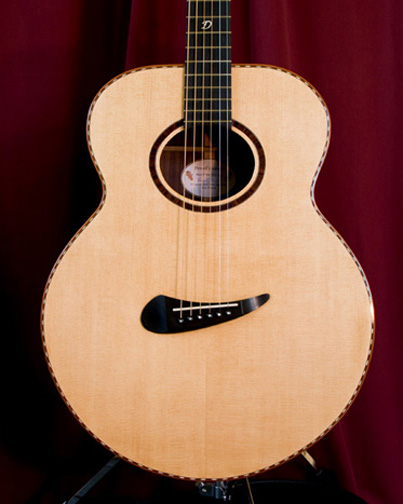
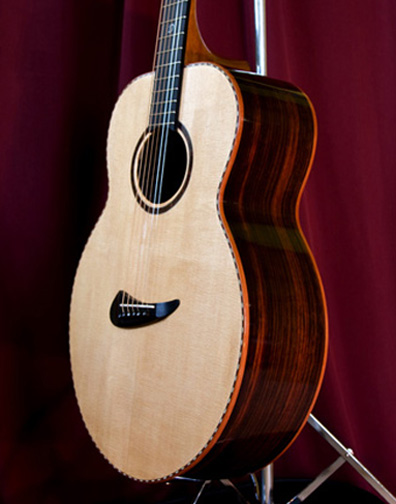
Standard Materials for the basic model:
Top: AAA Sitka Spruce
Back & Sides: 1st Grade Indian Rosewood
Neck: Mahogany (reclaimed)
Fingerboard: Ebony
Bridge: Ebony
Rosette: Indian Rosewood
Bracing: To match top materials
Bridge Pins: Ebony with mother of pearl eye
Headstock: Indian Rosewood
Top nut and Saddle: TUSQ
Logo: Mother of pearl oak leaf
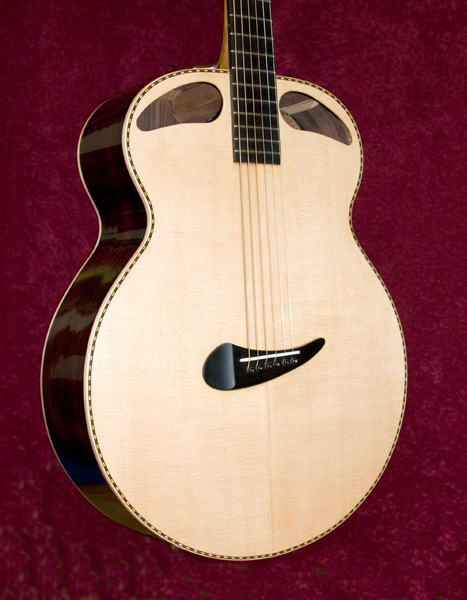
New Model for 2014
This new Powell design greatly increases the ‘sweet spot’ giving a full and rich well balanced sound.
The projection (volume) is increased making the whole instrument ‘bigger’
It is a full sized SFG with the ‘sound’ hole removed from the worst place you could have one on a guitar.
The bracing is now a lot lighter allowing the top to vibrate more freely.
Doesn’t look like a guitar? Looks strange? Well it sounds fantastic
Available via special order only.
Mid size Guitar, Cittern, and Guitar Shape Bouzouki (Gazouki, special for Julie Matthews).
Scale Length = 625mm (24.5/8″) guitar and bouzouki (short scale). 581mm (22.7/8″) Cittern
Lower Bout = 380
Upper Bout = 260
Body Length = 460mm
MID SIZE SFG
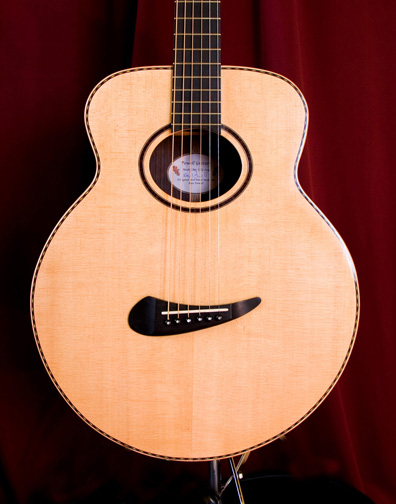
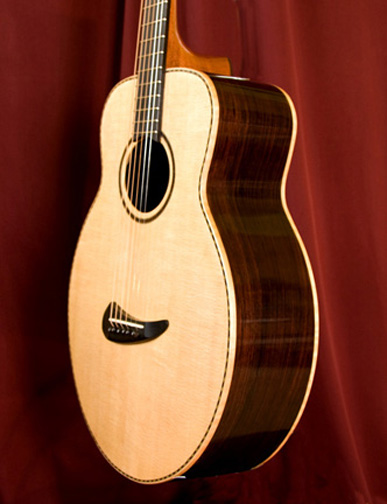
SFC TEN STRING CITTERN
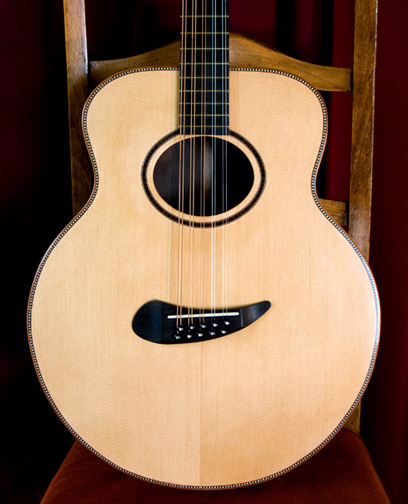
Guitar Shaped Bouzouki (Gazouki)
This short scale Bouzouki was commissioned by Julie Matthews and the back and sides are made from beautifully figured English Walnut.
The top is AAA Sitka Spruce
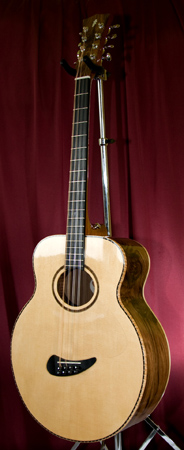
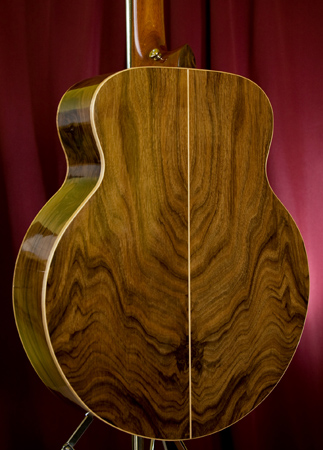
Small size Guitar (Parlour Guitar), Mandola (Octave Mandolin) and Tenor Guitar
Scale Length = 625mm (24.5/8″) guitar. 581mm (22.7/8″) Mandola and tenor guitar
Lower Bout = 350mm
Upper Bout = 235mm
Body Length = 430mm
SMALL SIZE SFG

SFM, MANDOLA (Octave Mandolin)
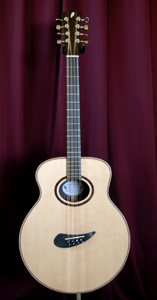
I have access to many fine tone woods, should you prefer different woods to the basic model please get in touch to discuss your preferences.
Each material has it’s own characteristics and its input to the finished tone goes hand in hand with playing styles and techniques. Mahogany for example tends to give softer, warmer tones whereas at the other end Maple can give a more bright, harder tone.
For the refined ear, rosewood is in between the two and can give perceived greater projection and depth and is my basic preferred choice for back and sides.
On a recent trip to the Healdsburgh Guitar Festival in Santa Rosa, California I met with Todd Taggart from Allied Lutherie. He sometimes stocks Brazilian rosewood stump wood which is fine highly figured sometimes bizarre grain patterned pre CITES Brazilian rosewood stumps left over from the days of heavy logging and ground clearance (photo to follow). Brazilian Rosewood is an endangered species and thought must be given to using this wood. Some of the larger tone-wood suppliers quite rightly refuse to stock this wood because of its endangered status.
Below is a Brazilian Rosewood back and side set I was very fortunate to find in this country.
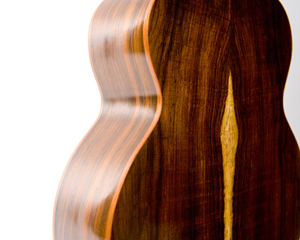
Sitka Spruce is my preferred choice for the steel string top. I have recently found an excellent supplier of great AAA and master grade tops in Alaska, he has always provided me with fantastic wood. My standard is AAA grade and master grade is also available at extra cost.
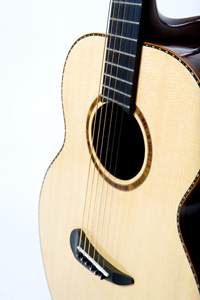
The basic model can be customised with the material or inlay of your choice. My standard logo is an oak leaf.
I will be posting a page soon on wood types and perceived tones and properties. Again it all depends on playing styles and abilities. A great sounding guitar just makes you want to play more and more. I read a quote recently “a great instrument makes an average player sound great and a great player sound fantastic” I believe this to be true.
FINISH
I finish my instruments with traditional shellac and use the french polishing technique. The environmental issues associated with the accepted cellulose lacquer spraying is definitely not my approach. When hardened the shellac finish is just as hard, more natural (not like a sheet of plastic) and more important is easy to repair and touch up without having to re varnish the whole instrument.